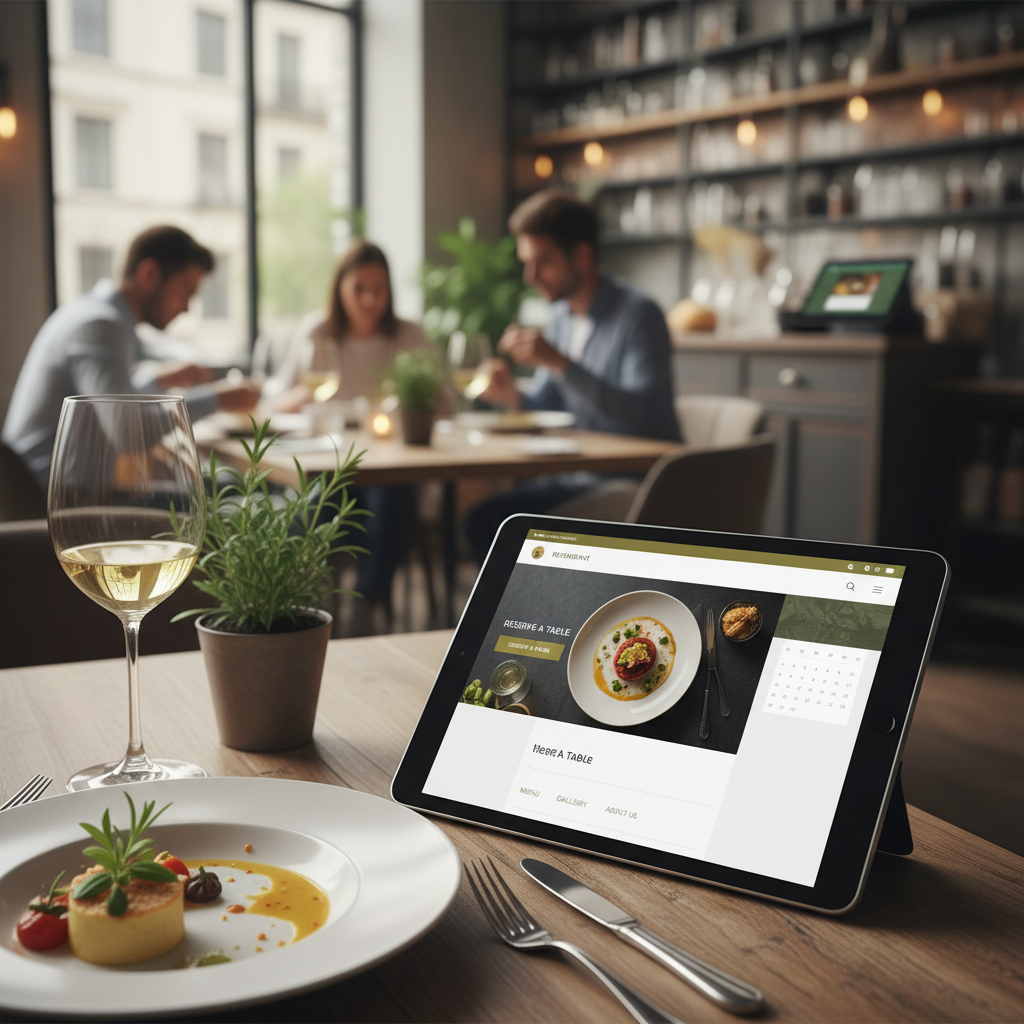
The culinary landscape has undergone a seismic shift where the first bite no longer happens at the table, but on a smartphone screen. For a high-end establishment or a bustling bistro, the digital storefront is the primary engine of revenue. After a decade of refining digital strategies at OUNTI, we have observed that the difference between a fully booked floor and an empty dining room often lies in the friction present within the user journey. Implementing effective web design for restaurants with reservations is not merely about aesthetic appeal; it is about building a high-conversion funnel that respects the diner's time and the restaurant's operational flow.
Most agencies treat restaurant websites as digital brochures. They upload a PDF menu, add a "Contact Us" page, and consider the job done. However, in a competitive market, this approach is a recipe for obsolescence. A professional platform must act as an automated concierge. When we look at the logistics of high-traffic areas, such as our work providing bespoke web design services in San Giuliano Milanese, we see that local diners demand immediacy. If your reservation system requires a phone call or a manual email confirmation, you are losing approximately 40% of potential weekend bookings to competitors who offer real-time availability.
The Architecture of an Intent-Driven User Experience
To understand the technical requirements of modern hospitality web design, one must first understand the psychology of the hungry user. Most restaurant site visits occur on mobile devices, often while the user is in transit or multitasking. This necessitates a "Mobile-First" philosophy where the "Book a Table" button is ubiquitous but not intrusive. The technical architecture must prioritize Largest Contentful Paint (LCP) to ensure that high-resolution imagery of signature dishes does not compromise load speeds. A delay of just three seconds can lead to a bounce rate increase of over 50%.
Integrating a seamless booking engine requires a deep understanding of API synchronization. Whether using proprietary software or third-party leaders like OpenTable or Resy, the integration must be native. We have found that redirecting a user to an external URL to finish a booking breaks the trust cycle and decreases conversion. Instead, the reservation module should be embedded, maintaining the brand’s visual identity throughout the process. This level of detail is similar to the meticulousness we apply when developing a página web para notarías, where precision and trust are the foundation of the digital experience.
Furthermore, the data collected during the reservation process is a goldmine for personalized marketing. A sophisticated web design for restaurants with reservations allows the establishment to capture dietary preferences, anniversary dates, and seating favorites. This data, when handled in compliance with GDPR and modern privacy standards, allows for hyper-targeted email campaigns that bring diners back during slow mid-week shifts.
Operational Efficiency and Backend Integration
A website should solve problems for the restaurant staff as much as it does for the customers. An optimized reservation system reduces the "no-show" rate through automated SMS and email reminders. From a development standpoint, this requires robust backend logic that can handle deposits or credit card holds for larger parties—a feature that has become standard in Michelin-starred environments. By automating these touchpoints, the front-of-house staff can focus on hospitality rather than administrative tasks.
Our experience shows that the logistical complexity of managing a dining room is not unlike managing a fleet. When we analyze the requirements for diseño web para empresas de transporte, the core challenge is capacity management. For a restaurant, this means the website must communicate directly with the Point of Sale (POS) system. If a walk-in party takes the last table, the website must update its availability in milliseconds to prevent double-booking. This level of real-time synchronization is what separates a professional digital asset from a template-based amateur site.
In regions with high tourism and diverse clientele, such as our projects involving web development in Granadilla de Abona, multilingual support is another pillar of successful web design for restaurants with reservations. Providing a booking interface in the diner's native language removes the final barrier to entry, significantly increasing international bookings.
SEO and the Visibility of the Digital Table
Visibility is the precursor to conversion. A restaurant can have the most intuitive booking system in the world, but if it doesn't appear in local search results, it doesn't exist. Local SEO is intrinsically linked to how your website handles structured data. By using Schema.org markup specifically for restaurants, we tell search engines exactly what your opening hours are, your price range, and—most importantly—your real-time availability for reservations. This allows Google to display a "Reserve a Table" button directly within the Search Engine Results Pages (SERPs).
Content strategy also plays a vital role. High-authority insights from organizations like the National Restaurant Association suggest that consumers are increasingly looking for transparency in sourcing and sustainability. Integrating a blog or a "Sourcing Map" into the design not only builds authority but also provides more keywords for search engines to index, improving organic reach without relying solely on paid social media ads.
The visual storytelling of the website must be backed by technical SEO. This includes optimizing image alt-tags for menu items and ensuring that the "reservations" keyword is strategically placed in H1 and H2 tags without triggering "keyword stuffing" penalties. The goal is to create a narrative where the user feels the atmosphere of the restaurant through the screen, leading them naturally toward the booking confirmation page.
Future-Proofing the Dining Experience
As we look toward the next decade of hospitality technology, the role of AI in web design for restaurants with reservations is becoming undeniable. We are starting to implement predictive analytics that can suggest optimal booking times to users based on historical traffic data, or chatbots that can handle complex booking inquiries ("Do you have a table for six near a window?") without human intervention. The objective is to make the digital interaction as warm and efficient as the physical dining experience.
At OUNTI, we believe that a restaurant's website is its most valuable employee. It works 24/7, never takes a holiday, and can handle thousands of customers simultaneously. By investing in a high-performance platform tailored specifically for the nuances of the hospitality industry, owners are not just buying a website; they are investing in a scalable system for growth. The fusion of high-end aesthetics, rigorous backend logic, and strategic SEO creates a digital ecosystem where every click has the potential to become a lifelong customer.
The transition from a simple online presence to a conversion-optimized booking machine is a journey of refinement. It requires a partner who understands that in the world of fine dining and hospitality, every pixel matters as much as every ingredient. As the digital and physical worlds continue to blur, those who master the art of the online reservation will be the ones who lead the industry into its next era of prosperity.