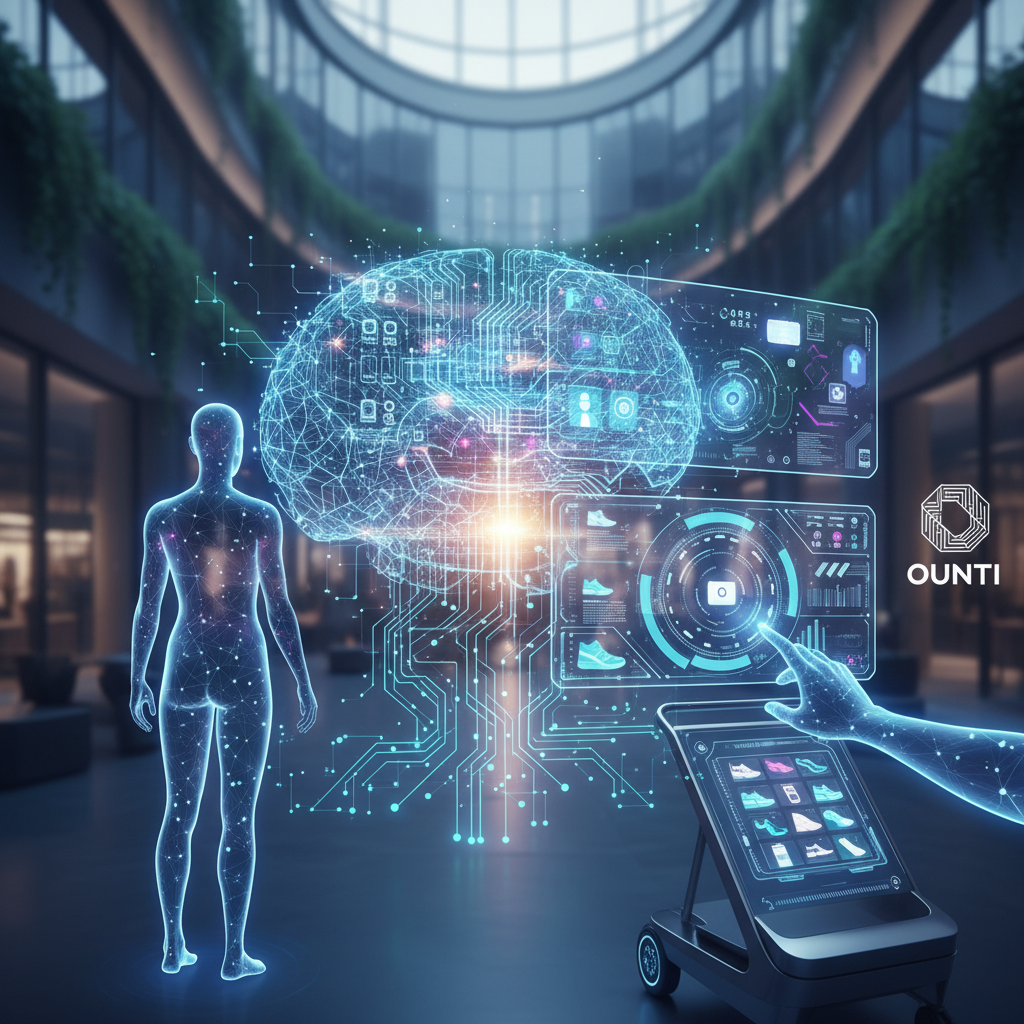
The digital landscape has shifted from a convenience-based model to an expectation-based reality. Over the last decade, we have witnessed the transition from static storefronts to dynamic, living ecosystems. As experts at OUNTI, we recognize that the modern consumer no longer views personalized recommendations as a luxury; they view them as a standard. The core of this transformation lies in AI-driven shopping experience personalization, a sophisticated blend of data science, predictive modeling, and user-centric design that redefines how brands interact with their audience in real-time.
For a long time, personalization was limited to "customers who bought this also bought that." Today, that approach is archaic. True AI-driven shopping experience personalization involves understanding intent, context, and the subtle nuances of human behavior. It is about creating a unique digital path for every visitor, ensuring that the interface they see, the products they are offered, and the narrative they encounter are tailored specifically to their current state of mind. This requires a robust infrastructure where the front-end design and back-end logic operate in perfect harmony.
The Technical Architecture of Hyper-Personalization
At the engineering level, achieving this level of customization requires moving beyond traditional relational databases. We are now looking at vector databases and real-time streaming analytics that process thousands of data points per second. When a user lands on a site, the system must analyze historical data—such as past purchases and browsing history—alongside real-time signals like mouse movement, dwell time on specific images, and even the weather or time of day at the user's location. By integrating web design for marketing agencies, we can ensure that these data-driven insights are translated into visually compelling and high-converting interfaces.
Generative AI has further pushed the boundaries. We are no longer limited to pre-rendered assets. Modern platforms can now generate dynamic product descriptions or visual layouts on the fly. If a user is identified as price-sensitive, the UI might highlight discounts and value propositions. Conversely, for a luxury-focused shopper, the interface might shift towards high-quality imagery and narrative-driven content. This level of fluidity is what separates market leaders from those who are simply surviving. Large research firms like McKinsey & Company have consistently shown that personalization doesn't just increase sales; it fosters long-term brand loyalty.
This technical evolution is not reserved for retail giants alone. Small and medium enterprises in specific locales can leverage these tools to dominate their niche markets. For instance, businesses looking for specialized digital growth in Villajoyosa can utilize localized AI models to better understand regional consumer trends, allowing them to compete with global platforms by offering a more intimate, culturally relevant shopping journey.
Psychological Triggers and the Algorithmic Response
The success of AI-driven shopping experience personalization is rooted in behavioral psychology. Humans are biologically wired to respond to relevance. When a digital environment feels "intuitive," it is because the algorithm has successfully reduced the cognitive load on the user. Choice paralysis is a significant barrier in e-commerce; by using AI to curate a narrow but highly relevant selection of products, we help the customer make decisions faster and with more confidence.
This psychological alignment extends to the service sector as well. Consider the medical or wellness industries where trust is paramount. Through web development for physiotherapists, AI can be used to personalize patient intake journeys or recommend specific recovery equipment based on a user's previous interactions. The goal is to make the technology invisible. The user shouldn't feel like they are being tracked; they should feel like they are being understood. This distinction is the hallmark of a high-end digital agency.
Furthermore, the implementation of sentiment analysis through natural language processing (NLP) allows brands to gauge user frustration or excitement during the shopping journey. If a user is struggling with a checkout form, the AI can trigger a proactive chat support or simplify the UI in real-time. This proactive friction reduction is the next frontier of conversion rate optimization (CRO).
Scalability and Localized Implementation
One of the most common misconceptions is that AI-driven shopping experience personalization is a "plug-and-play" solution. In reality, it requires constant refinement and localized tuning. What works for a consumer in a bustling transit hub like Fiumicino might not resonate with a customer in a quiet residential area. Context is king. The algorithms must be trained on localized data to ensure that cultural nuances and regional purchasing habits are respected.
Scalability also involves privacy. As we move towards a cookieless future, AI must rely more on first-party data and "zero-party data" (information customers intentionally share). Designing systems that respect privacy while delivering personalization is a delicate balance. We focus on transparent data collection methods that provide clear value to the user in exchange for their information. When the user sees that sharing their preferences leads to a significantly better shopping experience, the barrier to data sharing dissolves.
From an agency perspective, our role is to act as the bridge between complex AI capabilities and the brand's unique identity. We don't just implement tools; we craft experiences. This involves a rigorous process of A/B testing, heatmapping, and algorithmic auditing to ensure that the personalization engine is actually driving revenue and not just creating noise. The ROI of these systems is measurable through metrics like Average Order Value (AOV), Customer Lifetime Value (CLV), and reduced cart abandonment rates.
The Future: Predictive Commerce and Beyond
Looking toward the next five years, AI-driven shopping experience personalization will evolve into predictive commerce. We are moving from responding to user actions to anticipating them before they happen. Imagine a digital storefront that knows you need a refill of a specific product before you've even realized it’s gone, and has already optimized the logistics to offer you the best price and delivery time the moment you open your browser.
The integration of Augmented Reality (AR) with AI will also play a crucial role. Personalization will extend into the physical space, where AI analyzes your environment through a camera lens to suggest products that fit your home or your style in real-time. For agencies like OUNTI, this means our designs must be more than just "responsive" to screen sizes; they must be responsive to the user's entire reality.
The businesses that thrive will be those that view AI not as a cost-cutting measure, but as a relationship-building tool. By investing in deep personalization, brands can move away from transactional interactions and toward meaningful connections. The complexity of the backend should never overshadow the simplicity of the frontend. In the end, the most sophisticated AI is the one that makes the user feel like the store was built specifically for them, at that exact moment, for that exact need.
Navigating this landscape requires a partner with a decade of experience in the trenches of web development and digital strategy. At OUNTI, we remain committed to pushing the boundaries of what is possible, ensuring that our clients are always at the forefront of the technological curve. The future of commerce is personal, and that future is powered by AI.