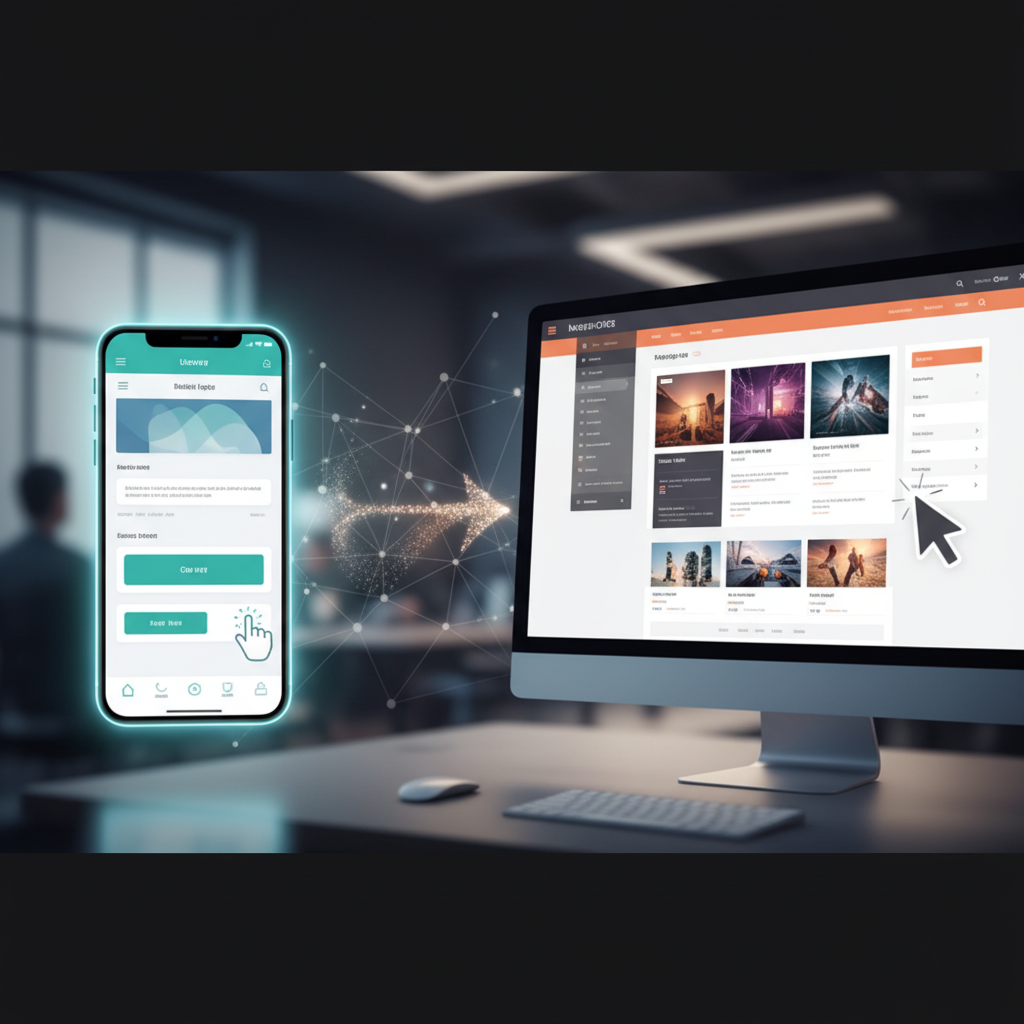
In the early days of the commercial internet, the process was linear and predictable. We sat at desks, stared at CRT monitors, and navigated with a mouse. Designers built for a fixed width, and the "Desktop First" mentality wasn't just a choice—it was the only reality. Fast forward to the current landscape, and the paradigm has shifted so drastically that the debate between Mobile First vs. Desktop First Design has become the cornerstone of every high-level discovery meeting we hold at OUNTI. After a decade of navigating the evolving standards of the W3C and the volatile demands of search engines, I have seen that the choice between these two methodologies is rarely about aesthetics; it is about the hierarchy of information and the psychology of user intent.
The core of the Mobile First philosophy is rooted in the concept of progressive enhancement. It forces a designer to strip away the "fluff" and focus on what truly matters to the user. When you are working with a 375px width, you cannot afford to waste space on decorative elements that do not drive conversion or provide essential information. This constraint is actually a gift. By designing for the smallest screen first, we establish a core foundation of content and functionality that is robust. As the screen size increases, we progressively add more complex features, larger imagery, and multi-column layouts. This approach ensures that a user on a subway in a low-bandwidth area has the same access to vital information as a user on a high-speed fiber connection in a corporate office.
The Constraint of the Small Screen as a Design Catalyst
One of the most common misconceptions I encounter is that Mobile First means making things "simpler." On the contrary, it requires more sophisticated engineering and strategic thinking. When we work on projects like top-tier digital solutions in Barcelona, we see that users in high-density tech hubs demand speed and instantaneous utility. If the mobile experience is just a shrunk-down version of a desktop site, the cognitive load on the user increases. They are forced to pinch, zoom, and hunt for call-to-action buttons that are buried under layers of legacy desktop navigation.
From a technical standpoint, Mobile First design directly impacts performance. By serving mobile-optimized assets first and only loading heavier desktop-specific scripts or high-resolution background videos when the viewport exceeds a certain breakpoint, we significantly reduce Time to First Byte (TTFB). This is not just a benefit for the user; it is a requirement for search visibility. Since Google moved to mobile-first indexing, the mobile version of your site is the primary version that determines your ranking. If your mobile site is an afterthought, your entire digital presence will suffer, regardless of how beautiful the desktop version looks on a 27-inch monitor.
However, the transition is not always seamless for companies with complex service offerings. For instance, when we handle advanced e-learning platform development, the complexity of the user interface—which might include interactive dashboards, grading systems, and multi-paneled video players—poses a significant challenge for a mobile-only approach. In these cases, the "Desktop First" or a hybrid approach might still hold some merit during the initial wireframing phase to map out full functionality, even if the final implementation follows mobile-first principles.
When Desktop First Still Holds the Crown
Despite the "Mobile First" mantra being shouted from every rooftop in Silicon Valley, there are specific scenarios where Desktop First is a more logical starting point. Desktop First follows the principle of "graceful degradation." You design the most feature-rich, visually immersive experience possible and then systematically remove or hide elements as the screen size shrinks. This is particularly relevant for B2B software, complex data visualization tools, and creative portfolios where the primary audience is likely using a workstation.
Think about a professional architect or a software engineer. Their workflow is inherently desktop-centric. If your primary conversion happens during office hours on a 4K monitor, focusing your initial design energy on a mobile prototype can lead to a watered-down desktop experience that feels empty or lacking in utility. At OUNTI, we analyze the analytics of our clients' existing traffic before making this call. If 85% of your traffic is on desktop, a Desktop First approach ensures that your primary demographic is catered to with surgical precision, provided that the mobile "degradation" is handled with extreme care so as not to alienate the remaining 15%.
We see this often in specific geographic markets. For example, businesses looking for a robust expanding digital presence in Fuengirola often cater to a mix of local service seekers and international investors. The former might find you on a mobile device while on the move, while the latter will perform deep-dive research on a laptop. Balancing these two worlds requires a deep understanding of how "Mobile First vs. Desktop First Design" affects user journey mapping across different hardware profiles.
Performance, SEO, and the Technical Bridge
Regardless of which direction you start from, the bridge between the two is where the magic happens. Modern CSS frameworks and techniques like CSS Grid and Flexbox have made the technical implementation of responsive design much more fluid, but they haven't solved the fundamental problem of content prioritization. This is where "Content First" design comes into play. Before a single pixel is drawn, the content must be audited. What is the one thing the user needs to do? On a specialized web design for cleaning services site, the mobile user likely wants a "Call Now" button and a quick quote form. On the desktop, they might want to read testimonials, view a gallery of before-and-after photos, and check detailed service area maps.
A senior designer knows that "Mobile First vs. Desktop First Design" is also a conversation about touch targets versus click targets. The precision of a mouse cursor allows for dense menus and small buttons. The human thumb requires at least a 44x44 pixel hit area. When you design for desktop first, you often find yourself having to completely re-architect the navigation for mobile because a "hover" state doesn't exist on a touchscreen. This is why starting with mobile is often safer; it's easier to scale up a design and add complexity than it is to try and squeeze a complex "mega-menu" into a hamburger icon without losing the user's interest.
Furthermore, we must consider the hardware limitations. Mobile devices, while powerful, often struggle with heavy JavaScript execution and large DOM (Document Object Model) sizes compared to high-end desktops. A Mobile First approach encourages a leaner codebase. It forces developers to use native browser features and lightweight CSS animations rather than relying on heavy third-party libraries that can tank your Core Web Vitals. In the current SEO climate, a slow-loading mobile site is a death sentence for organic growth.
The Evolution of User Intent
The choice between mobile and desktop isn't just about the screen—it’s about the context of the user. A user on a mobile device is often "in-between" tasks, looking for quick answers, or browsing during a commute. A user on a desktop is often in "work mode" or "research mode," ready to consume long-form content and perform complex interactions. As an agency that has spent a decade refining these processes, we’ve learned that the most successful digital products are those that don't just "fit" the screen, but "respond" to the user's environment.
We are currently moving toward a future where "Mobile First vs. Desktop First Design" might eventually be replaced by "Contextual Design." This involves using signals like location, time of day, and device type to serve completely different layouts and content priorities. But until that level of AI-driven personalization becomes the standard for every small to medium enterprise, the Mobile First methodology remains the most resilient and future-proof strategy for 90% of the web.
In the end, the goal of OUNTI is to ensure that the friction between the user and the information is zero. Whether we are building a high-conversion landing page for a local service or a complex international platform, we prioritize the hierarchy of information. We start by asking: "If the user only had ten seconds and a 5-inch screen, could they find what they need?" If the answer is yes, we have a solid foundation. From there, we can expand into the expansive, immersive world of desktop design, ensuring that every pixel, regardless of the device, serves a purpose. The debate isn't about which is better; it's about which starting point leads to the most efficient, accessible, and high-performing end product for the specific goals of the brand.