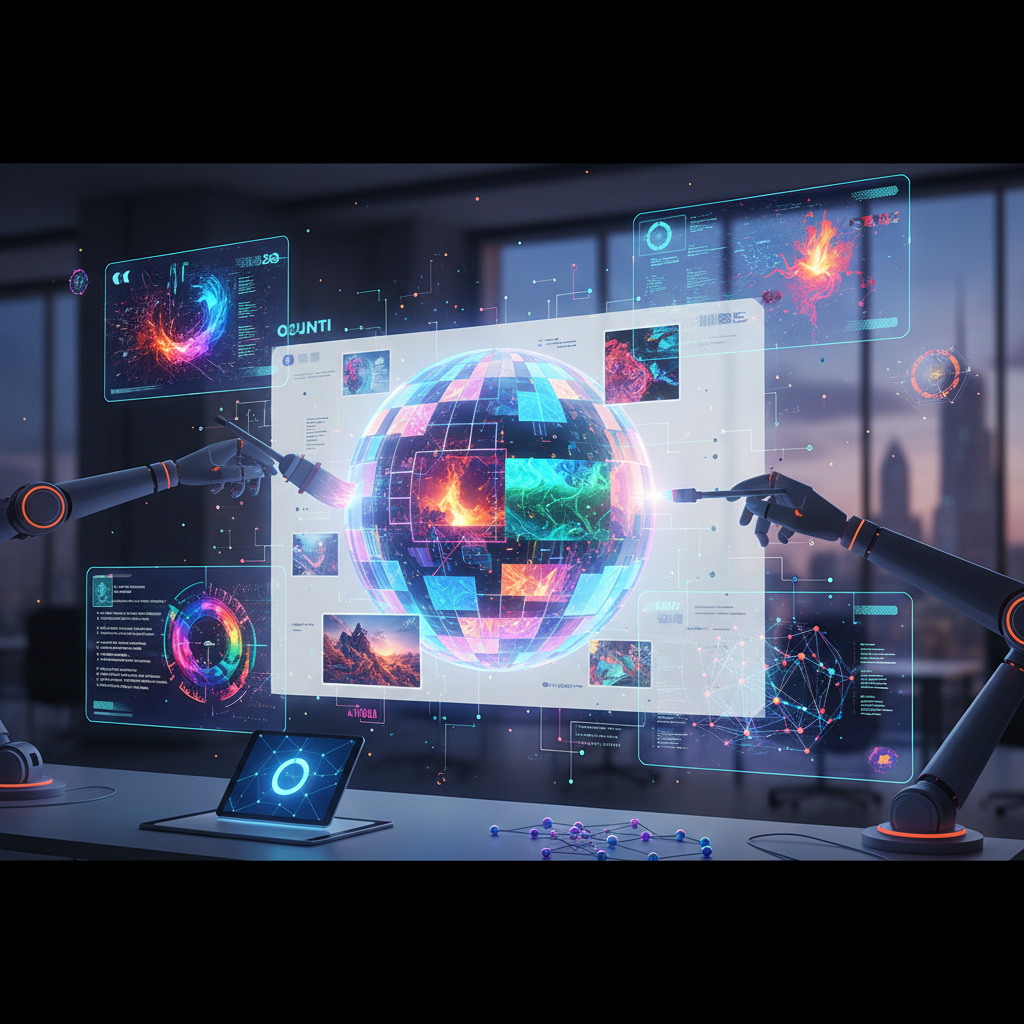
For over a decade, the digital design landscape has been defined by a constant struggle between authenticity and efficiency. In the early days of web development at OUNTI, we relied heavily on high-end stock photography or expensive custom shoots to populate our clients' digital narratives. However, the paradigm has shifted. We are no longer limited by the physical lens or the generic nature of stock libraries. We have entered the era of synthetic media, where AI image creation for blogs has become a cornerstone of strategic content marketing. This transition is not merely about convenience; it is about the granular control over visual language that was previously unattainable for most medium-sized enterprises.
The Architecture of the Perfect Prompt: Moving Beyond Basic Descriptions
As experts in the field, we understand that effective AI image creation for blogs is not about typing a simple sentence and hoping for the best. It is a disciplined craft involving prompt engineering, where the director—our design team—must understand lighting, focal lengths, textures, and artistic movements. When we approach a project, we view the generative model as a highly skilled but literal-minded illustrator. To achieve professional results, one must define the technical parameters: the aspect ratio, the degree of stylization, and the specific seed numbers for brand consistency. This ensures that every image generated fits the overarching brand identity rather than looking like a disconnected piece of digital art.
The technical depth required involves understanding the latent space of models like Midjourney or Stable Diffusion. We leverage these tools to create visuals that align with specific user personas. For instance, when designing a high-end digital presence, we might utilize "cinematic lighting" and "editorial photography" keywords to evoke a sense of luxury and precision. This level of detail is crucial for maintaining a competitive edge in a saturated market where users can spot generic AI-generated content from a mile away. Quality control remains the most significant variable in this equation.
Vertical Integration: Tailoring Visuals for High-Stakes Industries
Different sectors require vastly different visual vocabularies. In the world of high-end hospitality, visuals must evoke emotion, scent, and touch. We have found that the sophisticated use of synthetic media allows us to create atmospheric renderings that capture the unique essence of a property before a professional photographer even steps on-site. This is particularly relevant when we are constructing a specialized Web para hoteles boutique, where the visual narrative must be as bespoke as the service offered to the guests. In this context, AI image creation for blogs serves as a bridge between architectural vision and guest expectations.
Conversely, the technical and industrial sectors require a different aesthetic—one of precision, innovation, and structural integrity. Abstracting complex concepts into digestible visual metaphors is where generative AI shines. When handling projects involving Desarrollo web para empresas de ingeniería, we often use AI to visualize internal mechanical processes or futuristic infrastructure projects that do not yet exist. These images provide a forward-looking perspective that builds authority and demonstrates a commitment to innovation, something that traditional stock photography fails to achieve due to its inherent "lag" behind current technology.
The SEO and Psychological Impact of Unique Imagery
From a technical SEO perspective, search engines are increasingly sophisticated at identifying original content. While Google has stated that it does not penalize AI-generated content per se, it does reward "helpfulness" and "originality." Using AI image creation for blogs allows us to produce unique assets that have never been indexed before. This uniqueness contributes to a better E-E-A-T (Experience, Expertise, Authoritativeness, and Trustworthiness) score. When an image is truly unique and contextually relevant, it increases time-on-page and reduces bounce rates, as users are more likely to engage with a visual that perfectly complements the written word.
Psychologically, the human brain processes images 60,000 times faster than text. In a world of infinite scrolling, the primary goal of a blog header is to stop the thumb. By integrating advanced generative techniques, we can create "pattern interrupts"—visuals that are just striking or unusual enough to capture attention without being jarring. This strategic use of aesthetics is a core component of the OUNTI methodology. We focus on the intersection of cognitive psychology and digital design to ensure that every pixel serves a conversion goal.
Localized Visual Strategies and Regional Identity
Digital design does not exist in a vacuum; it is often tied to a physical location and a specific cultural context. Even in the digital realm, localized aesthetics play a massive role in building trust with a local audience. Our work in various regions has taught us that the color palettes and architectural styles reflected in blog imagery should resonate with the local environment. For example, when we provide creative consulting and design in lugar Fuengirola, the visuals often incorporate the bright, coastal light and Mediterranean textures that the local population identifies with.
Similarly, the historical and inland character of other regions requires a different approach. When crafting content and visual narratives within the lugar Antequera market, we might lean towards earthier tones and stone textures that mirror the local landscape and heritage. AI image creation for blogs allows us to hyper-localize content at scale, ensuring that a global brand can feel like a local neighbor. This level of customization was previously cost-prohibitive but is now a standard part of our high-tier design strategy.
Ethical Considerations and the Future of Synthetic Media
As we navigate this new frontier, ethical considerations are paramount. Transparency in how we use these tools is essential for maintaining the trust we have built over the last decade. Large-scale tech leaders, such as Adobe, have already begun implementing "Content Credentials" to provide metadata regarding the provenance of an image. According to the Adobe Generative AI Guide, the future of this technology lies in the hybrid model where human creativity directs machine efficiency. We agree with this sentiment entirely; AI is a tool, not a replacement for the designer’s soul.
At OUNTI, our workflow involves a rigorous "human-in-the-loop" process. Every image generated is subjected to professional retouching, color grading, and often, manual compositing. This ensures that the final output is free from the common "uncanny valley" artifacts often associated with low-effort AI outputs. We also stay updated on the legal landscapes regarding copyright and intellectual property in the AI space, ensuring that our clients are always protected. The goal of AI image creation for blogs is to enhance the human narrative, not to automate it into obsolescence. We are excited about the possibilities this technology brings to our partners and the creative heights we have yet to reach.
The evolution of digital imagery is moving toward a future of total personalization. Imagine a blog where the images change based on the reader's local weather, time of day, or even their previous browsing history. While we are not quite there yet, the foundations we are laying today with advanced generative tools are the first step. By embracing these technologies with a senior expert's eye, we ensure that our clients don't just keep up with the trends—they set them.